7 Signs Your Home Systems Aren’t Working (And How to Fix Them)

Is your home hard to live in? Like it's just working harder than it really should be.
You’re always tidying, but things never stay that way.
You’re constantly looking for things you just had.
You’re resetting surfaces, redoing systems, and rethinking where things should go.
That constant friction adds up.
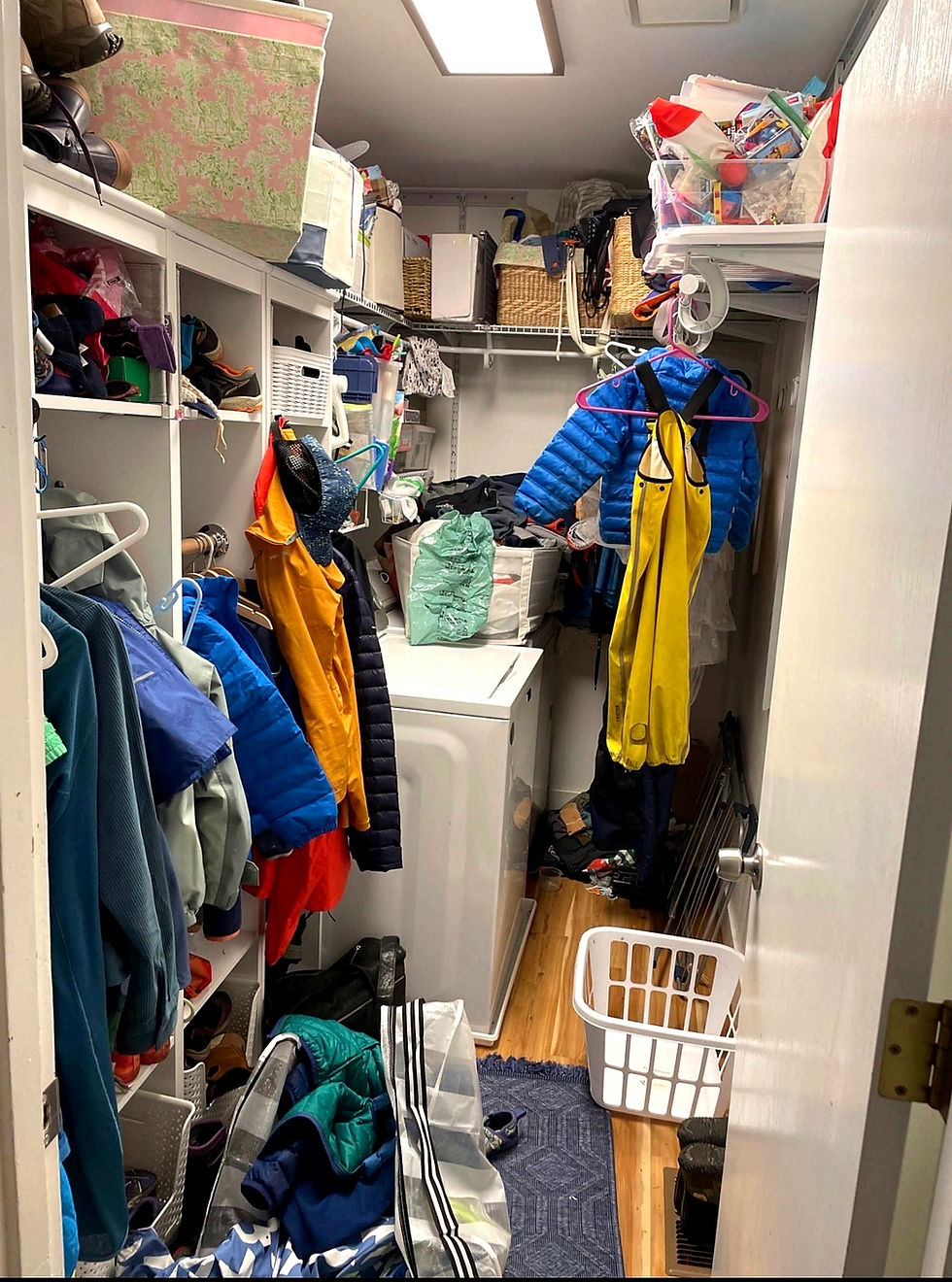
When a home isn’t set up to support the way a household actually moves, lives, and operates, it creates small, repeated points of resistance throughout the day. The kind that quietly drains your energy without you even realizing it. Over time, even simple routines start to feel heavier than they need to be.
You know what this usually is? A home systems problem.
This is something I see constantly in real homes, especially busy family homes where life has evolved, schedules have changed, and the house simply hasn’t kept up. A space can look organized, well-designed, and even beautiful, and still be working far too hard behind the scenes.
And when a home is working too hard, the people living in it end up working harder too. This often leaves you feeling exhausted, stressed, overwhelmed, and unmotivated.
Sign 1: You’re Constantly Moving the Same Items Around
One of the clearest signs your home isn’t functioning well is that you’re always relocating items instead of truly putting them away. Mail moves from the counter to the island to the table. Papers travel in small stacks. Bags, returns, and miscellaneous life items seem to rotate through the house on a loop.
This pattern is rarely about laziness or lack of discipline. It usually means your home is missing true landing zones. Not decorative baskets or overly styled systems, but functional drop points that match how your day actually flows.
Homes run on transitions — walking in the door, unloading bags, and setting things down mid-task. These small, everyday moments happen quickly and often without much thought, which is exactly why the surrounding systems need to support them instead of fighting them.
If there isn’t a clear, obvious place for high-frequency items to land, they will land everywhere. Repeatedly. Creating realistic drop zones where life naturally happens can significantly reduce visual clutter, minimize constant resetting, and ease the daily decision fatigue that comes from managing the same items over and over.
Sign 2: Simple Tasks Take More Effort Than They Should
If making lunches requires walking back and forth across the kitchen, if laundry supplies live in three different places, or if getting out the door feels stressful every single morning, your home layout is likely working against your routines.
Many homes are organized by category instead of by function. On paper, that sounds logical. In real life, it creates inefficiency that secretly weighs heavily on us over time.
People don’t live in categories. They live in sequences. Morning routines, after-school routines, sports nights, workdays. When a home is organized around tasks instead of just item types, the flow of daily life becomes smoother and noticeably less draining. Grouping items by how they are actually used reduces extra steps, extra searching, and unnecessary movement.
Sign 3: “Temporary” Piles Keep Becoming Permanent
Every home has a version of this. The chair (Peloton) that collects clothes. The garage corner filled with “deal with later” items. The section of the counter that quietly became a holding zone for everything in limbo.
These piles don’t usually exist because someone doesn’t care. They exist because there is no defined boundary. When a space has unlimited capacity, it will continue to absorb items until it feels overwhelming.
Functional containment changes this. Even one designated bin, basket, or clearly defined zone creates a natural space limit. And limits are what prevent spaces from slowly expanding into stress points.
Sign 4: You Can’t Easily See What You Own
A home that feels hard to maintain often hides inventory. Overstuffed drawers, crowded cabinets, and packed storage areas make it difficult to see what you actually have. This leads to rebuying items, longer search times, and daily frustration.
From a functional standpoint, visibility equals efficiency. When you can easily see and access items, decision-making becomes faster and routines require less effort. Often, the smartest fix is not more organizing products, but editing and creating breathing room so systems are easier to use in real life.
Sign 5: Mornings and Evenings Feel Weirdly Stressful
Shoes in multiple places. Backpacks drifting. Water bottles are multiplying. Keys are disappearing at the exact wrong moment.
If transitions in and out of the home feel chaotic, even when the house looks organized overall, the issue is usually behavioral misalignment. The systems in the home are based on ideal habits instead of actual habits.
Where do people really drop things when they walk in?
Where do bags naturally land?
Where do kids unload without thinking?
Systems that align with real behavior are significantly easier to maintain than systems that require constant correction.
Sign 6: You Avoid Certain Spaces Altogether
The garage you don’t want to open. The spare room you close the door on. The closet that feels too overwhelming to start.
Avoidance is not a motivation issue. It is a scale issue. When a space feels overly full, undefined, or mentally heavy, your brain categorizes it as high effort and postpones engagement.
The most effective fix is not a full overhaul. It is narrowing the scope. One shelf. One category. One contained win. Small, manageable progress reduces overwhelm and makes the space feel functional again much faster than an all-or-nothing organizing approach.
Sign 7: You’re Always Organizing, But Nothing Sticks
This is one of the biggest indicators that your home systems are requiring too much maintenance. If you are constantly resetting your space and it keeps unraveling, the issue is not effort. It is a system design issue.
Overly complicated categories, inconvenient storage, high-maintenance setups, and systems that don't support your daily routines and habits may look impressive, but they often fail in busy households. A functional home is not one that looks perfect right after a reset. It is one that is easy to maintain on a random, exhausting weekday when no one has extra energy to manage it.
That is the real benchmark of an effective organizing system.
How to Make Your Home Easier to Live In (Without Redoing Everything)
If your home feels harder than it should, the solution is rarely a full reset. The most impactful improvements are usually small, strategic adjustments that reduce friction in your daily routines rather than redoing everything at once.
Try starting with four simple, high-impact shifts:
Observe where items naturally land and create intentional “homes” in those exact spots instead of forcing them into ideal locations you never use — think progress over pretty
Organize by routine (morning, lunch prep, after-school, etc.) instead of strict categories so daily tasks require fewer steps
Add simple containment where piles tend to form, like a basket for papers, returns, or grab-and-go items
Rethink your current setup by choosing easier systems: hooks instead of hangers, open bins instead of lids, and vertical space (walls, doors, and shelves) to reduce surface clutter
These are functional shifts, not aesthetic ones, and they directly reduce the amount of effort required to maintain your home day to day.
A Functional Home System Should Reduce Effort, Not Add to It
Organizing is often framed as something visual, but at its core, it is about function. A well-functioning home minimizes unnecessary movement, unnecessary decisions, and unnecessary friction. It supports the rhythms of daily life instead of interrupting them.

When systems align with how your household actually lives, something subtle but powerful changes. You spend less time searching, less time resetting, and far less mental energy managing your environment.
The house stops demanding constant attention and starts quietly supporting your day.
And that is the real goal. Not perfection. Not picture-ready spaces. But a home that functions so naturally that it feels lighter to live in, especially on the days when you are already tired and overwhelmed.


