What Is an Organizing System? (And What It Isn’t)

If you have ever felt like you are constantly tidying, resetting, and reorganizing the same spaces over and over again, chances are it's the system—or lack of one.
The term “organizing system” gets used a lot, but it is rarely explained in a way that actually helps you understand what it means in real life. Many people assume a system is a bin or a basket, and maybe they're labeled. In reality, a true organizing system is about function, flow, and sustainability — not perfection.
At its core, an organizing system is the structure that makes your home easier to use, easier to maintain, and easier to live in on a daily basis. No more tidying the same pile over and over again.
What Is an Organizing System?
An organizing system is a repeatable and very intuitive way a space works that supports your real daily routines and habits. It is not just about where things are stored, but how easily they can be accessed, used, and returned without constant thought. Can you kids and your significant other do it?

A well-designed system answers a few simple but powerful questions:
Where is this item actually used?
How often do we reach for it?
Who needs access to it?
How easy is it to put back?
When those questions are addressed, the space begins to function naturally instead of relying on constant cleanup.
What an Organizing System Is Not
One of the biggest misconceptions is that organizing systems are about buying more storage products. They are not. An organizing system is not:
A collection of matching bins
Decanted containers for visual appeal
A one-time tidy-up or reset
Stuffing items into drawers to clear surfaces
A Pinterest-perfect setup that is hard to maintain
Storage holds items. A system manages how items flow through your home. If a space looks organized but constantly falls apart, it likely has storage but not a true system.
Why Organizing Systems Matter in Real Homes
Real homes are full of schedules, responsibilities, and constant movement. Without systems, even small tasks require extra mental energy. You spend time looking for things, making repeated decisions, and resetting spaces that never quite stay functional.
Over time, those small moments add up.
Research in neuroscience and environmental psychology suggests that cluttered environments can place extra demands on our brains. When there are too many visual inputs competing for attention, it becomes harder to focus and process information efficiently. A recent study from researchers at Yale found that visual clutter can actually change how information flows through the brain, making it more difficult to filter what matters and ignore what doesn’t.
That’s one reason organizing systems matter so much in real homes. When everyday items have a clear place to live, the environment becomes easier for the brain to process. You spend less time searching, fewer decisions are required, and daily routines start to feel smoother.
Real-Life Examples of Organizing Systems That Actually Work
1. The Entryway Drop Zone System
Instead of shoes, backpacks, and mail piling up randomly, a functional entry system gives each category a clear home based on daily behavior. This might include open baskets for shoes, hooks at reachable heights for bags, and a tray for keys and mail. The system supports what naturally happens when people walk in the door rather than fighting against it.

2. A Pantry Organized by Use, Not Aesthetics
A system-focused pantry groups items by routine rather than by packaging style. Breakfast foods live together because mornings are rushed. Snacks are placed at kid level for independence. Backstock is stored separately, so daily items remain accessible. This creates a maintainable structure rather than a visually curated display.

3. A Sustainable Laundry System
Folding clothes neatly is not the system. The system is the full workflow from dirty to clean to put away. This could mean multiple hampers for pre-sorting, realistic laundry schedules based on household rhythm, or simplified wardrobes that prevent overstuffed drawers. When the flow is designed well, laundry becomes manageable instead of overwhelming.

4. A Linen Closet That Is Easy to Maintain
Instead of stacking random sheet sets wherever they fit, a functional system assigns one shelf per bedroom, folds sheet sets inside pillowcases so they stay together, and creates a defined backstock zone. This eliminates the constant reshuffling and makes retrieval simple and intuitive.

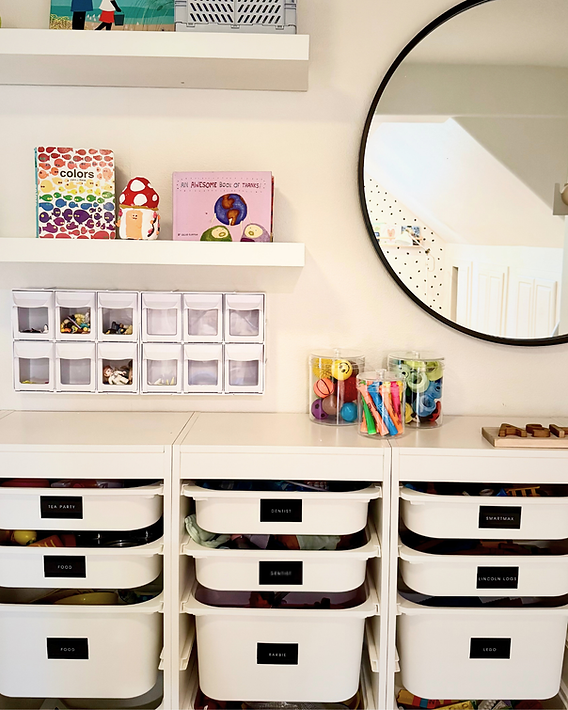
5. Kid-Friendly Toy Systems
A true toy system uses broad categories (blocks, art supplies, dolls, etc.) with labeled bins and accessible placement. When children can see and reach where items belong, cleanup becomes part of the routine rather than a daily struggle.
The Difference Between Tidying and Systems
Tidying is temporary. Systems are structural.
Tidying resets the surface of a space, making it look clean in the moment. A system changes how the space functions long-term. This is why many homeowners feel stuck in a cycle of cleaning without lasting results. The underlying flow of the space has never been reworked.
At The Organized House, our process focuses on:
Decluttering by category
Rehoming items intentionally
Rethinking placement based on daily routines
Creating containment with clear boundaries
Labeling for long-term maintenance
How to Know If You Have a Real Organizing System
A space likely has a true system if:
Everyone in the household knows where items belong
Items are easy to put away without thinking
The space stays functional even during busy weeks
You are not constantly re-organizing the same area
Maintenance feels simple, not exhausting
If you are repeatedly resetting the same space, the issue is rarely effort. It is usually a lack of structure and flow.
The Goal of an Organizing System
The goal is not perfection. The goal is ease.
A well-designed organizing system should reduce decision fatigue, support real-life routines, and make your home feel lighter to manage. When systems are in place, you spend less time searching, less time resetting, and more time simply living in your space.
Creating organizing systems in your home does not have to feel overwhelming or all-or-nothing. Sometimes you just need a fresh set of eyes, a clear plan, and a structure that actually works for how your household lives day to day. If you are ready for spaces that feel easier to maintain and less mentally draining, we can help.
The Organized House offers both virtual (if you don't live in the Portland, Oregon area) and in-person sessions to assess your space, identify what you truly need, and design systems that are realistic and sustainable. You can book your complimentary consultation to determine the right level of support and start building systems that work for your home, not against it.


